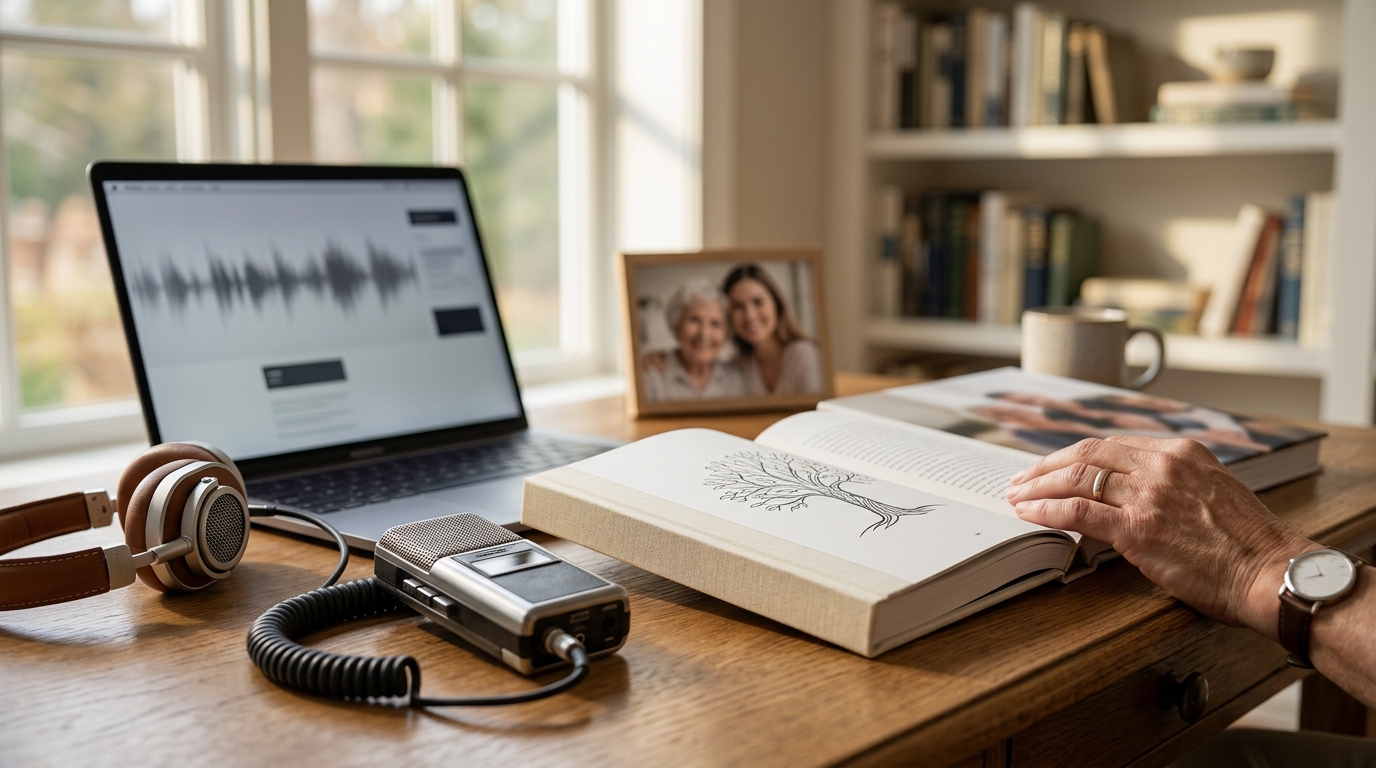
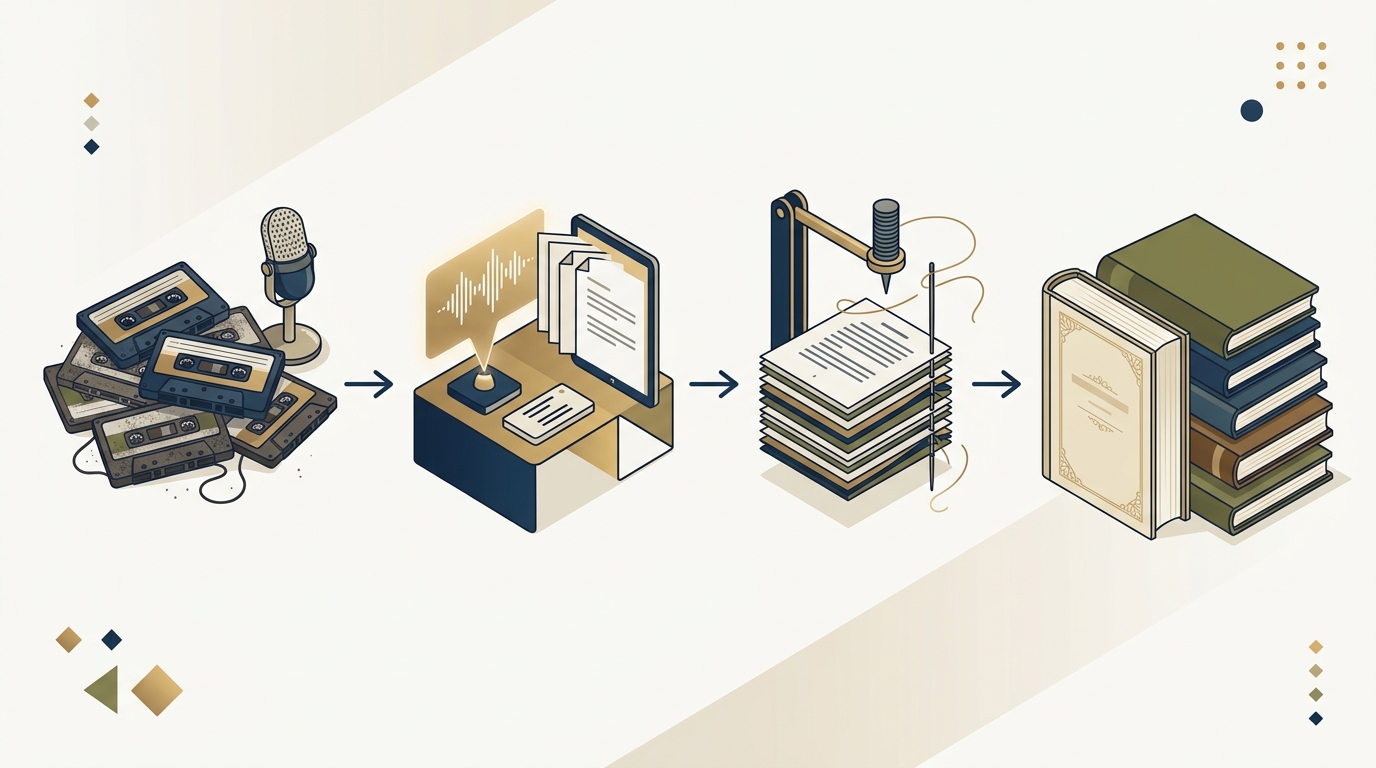
Converting raw voice recordings into a polished memoir requires a structured workflow that moves from transcription to thematic organization and finally to professional typesetting. VELLUM provides a dedicated studio environment where you can upload audio, answer guided prompts, and shape spoken memories into a cohesive narrative. This guide covers the essential technical and creative steps, including design customization, paper quality, and editing techniques, to help you produce a durable, beautiful hardcover book.
Design Customization
Design customization is the process of selecting visual elements that define the aesthetic identity of a physical book. For a memoir, the cover design serves as the first point of contact for the reader, setting the emotional tone before they open the pages. VELLUM offers a personalized casewrap hardcover format, which allows for a seamless, premium look where the cover wraps around the spine and back. This format is particularly effective for family histories because it creates a unified, high-quality object that feels substantial in the hand. For additional details, review the Sign in VELLUM.
Choosing a Cover Style
When selecting a cover, consider the era and mood of the stories. A minimalist design with a single strong image often works well for serious biographies, while a collage of family photos can suit a more nostalgic or celebratory tone. The casewwrap finish provides a smooth surface that is resistant to fingerprints and wear, ensuring the book looks new for decades. You can also choose from various font pairings that balance readability with stylistic flair. For additional details, review the Support Suggestions VELLUM VELLUM.
Interior Layout Options
Interior design involves choosing margins, font sizes, and line spacing to ensure comfortable reading. VELLUM’s fine typesetting engine automatically adjusts these elements to create a balanced page. You can select serif fonts for a traditional feel or sans-serif for a modern look. The goal is to reduce visual fatigue, allowing the reader to focus on the narrative rather than the layout. Consistency in design across all chapters is crucial for a professional finish. For additional details, review the Order Help Reprint Policy.
Paper Quality
Weight and Texture
Standard book paper typically ranges from 50 to 80 grams per square meter (gsm). Heavier paper feels more substantial but increases the overall weight of the book. Lighter paper is easier to hold for extended periods but may feel less premium. The texture of the paper also plays a role; a matte finish reduces glare and provides a soft touch, while a glossy finish enhances the vibrancy of any images included. For text-heavy memoirs, a matte, uncoated paper is often the preferred choice for readability.
Longevity and Preservation
Acid-free paper is essential for archival purposes. Standard wood-pulp paper contains acids that break down over time, causing pages to turn brown and crumble. Acid-free paper is chemically neutral, ensuring that the text remains legible and the pages remain intact for many years. When selecting a paper option, look for specifications that mention archival quality or acid-free composition. This investment in paper quality ensures that the stories are preserved for future generations.
Page Count
Page count is the total number of pages in a book, which directly impacts the physical dimensions and cost of the final product. Determining the appropriate page count requires balancing the length of the narrative with the desired thickness of the book. A standard memoir typically ranges from 150 to 300 pages, depending on the depth of the stories and the inclusion of photographs. VELLUM structures memoirs into twelve chapters, which helps in estimating the final page count based on the content of each section.
Estimating Length from Audio
You can estimate the page count by converting the total duration of your voice recordings into word count. A general rule of thumb is that one minute of spoken language translates to approximately 130 to 150 words. If you have 10 hours of recordings, that equates to roughly 78,000 to 90,000 words. At a standard layout of 250 to 300 words per page, this would result in a book of approximately 260 to 360 pages. This calculation helps you plan the physical size of the book and ensure it is manageable for the reader.
Impact on Binding
Ghostwriting and Editing
Ghostwriting and editing is the process of transforming raw, unstructured audio into a coherent, readable narrative. While VELLUM allows you to shape your own stories, professional editing ensures that the final text flows smoothly and maintains a consistent voice. Editing involves correcting grammar, removing redundancies, and restructuring sentences for clarity. This step is crucial for converting spoken language, which is often informal and repetitive, into written prose that is engaging and polished.
The Role of AI in Editing
Modern AI tools can assist in the initial stages of editing by transcribing audio and suggesting structural improvements. However, human oversight is essential to preserve the unique voice and personality of the storyteller. VELLUM’s guided questions help in organizing the content, but the final say on phrasing and facts remains with the user. This collaborative approach ensures that the memoir reflects the authentic perspective of the family member while maintaining a high standard of writing quality.
Structural Editing
Structural editing focuses on the overall organization of the book, ensuring that the chapters flow logically and the narrative arc is compelling. This involves rearranging sections, combining related stories, and identifying gaps in the narrative. A well-structured memoir guides the reader through the life of the subject in a way that is both chronological and thematic. By carefully editing the structure, you can create a book that is not just a collection of memories, but a cohesive story with a beginning, middle, and end.
Print Quantity
Print quantity is the number of copies of the book you order for distribution to family members and friends. Determining the right quantity involves considering the size of your family and the potential interest of extended relatives. Ordering too few copies may result in some family members not receiving a book, while ordering too many can lead to excess inventory that sits unused. VELLUM allows you to order personalized copies, ensuring that each recipient receives a book with their name on the cover if desired.
Calculating Distribution Needs
To calculate the print quantity, create a list of all potential recipients, including immediate family, close friends, and extended relatives. Assign a priority level to each recipient to determine how many copies are essential versus optional. For example, you might order 10 copies for immediate family and 5 copies for close friends. This approach ensures that the most important recipients are covered while allowing for flexibility in distribution. You can always order additional copies later if needed, but it is often more cost-effective to order a sufficient number initially.
Personalization Options
Color Printing
Color printing is the process of reproducing images in full color, which can significantly enhance the visual appeal of a memoir. For books that include photographs, color printing is essential to capture the vibrancy and detail of the images. However, color printing also increases the cost of the book and can affect the paper choice. VELLUM offers options for color printing that balance quality and cost, ensuring that the images look sharp and true to life.
Cost and Quality Considerations
Color printing is more expensive than black-and-white printing due to the additional inks and processes involved. The cost per page increases with the amount of color coverage, so it is important to consider the number of images and their placement. High-quality color printing requires a specific type of paper that can absorb the inks without bleeding or smudging. When planning your book, decide which images are most important and ensure they are printed in high resolution to maintain clarity.
Black-and-White vs. Color
For older photographs, black-and-white printing may be a more appropriate choice, as it can enhance the timeless quality of the images. Black-and-white printing is also less expensive and can be printed on a wider range of paper stocks. If your memoir includes a mix of old and new photos, consider using color for recent images and black-and-white for historical ones. This approach creates a visual contrast that highlights the passage of time and adds depth to the narrative.
Transcription Tools
Transcription tools are software applications that convert audio recordings into written text. These tools are essential for the initial stage of turning voice recordings into a book, as they provide a foundation for editing and organization. Modern transcription tools use artificial intelligence to recognize speech patterns and generate accurate text, even with background noise or multiple speakers. VELLUM integrates transcription capabilities into its studio, allowing you to upload audio files and receive a text draft that you can edit and refine.
Accuracy and Reliability
The accuracy of a transcription tool depends on the quality of the audio and the complexity of the speech. Clear, high-quality recordings with minimal background noise will produce the most accurate transcripts. If the audio is poor quality, the tool may struggle to recognize certain words, leading to errors that require manual correction. It is important to review the transcript carefully and make corrections as needed to ensure the final text is accurate. VELLUM’s interface allows you to listen to the audio while reading the transcript, making it easier to identify and fix errors.
Integration with Editing Workflow
Once the transcription is complete, the text can be imported into an editing environment where it can be refined and organized. VELLUM’s studio provides a seamless workflow that connects transcription with editing and design. You can edit the text directly in the platform, making changes to the wording, structure, and flow of the narrative. This integrated approach saves time and reduces the risk of errors that can occur when transferring text between different software applications.
Organizing by Theme and Timeline
Organizing by theme and timeline is the process of structuring the content of the memoir into a logical and coherent narrative. This involves grouping related stories together and arranging them in a sequence that makes sense to the reader. A chronological timeline follows the order of events in the subject’s life, while a thematic organization groups stories by topic, such as family, career, or travel. VELLUM’s twelve-chapter structure provides a framework for this organization, helping you to create a balanced and engaging book.
Chronological vs. Thematic
A chronological organization is straightforward and easy for the reader to follow, as it mirrors the natural progression of a life. However, it can sometimes feel linear and lack depth. A thematic organization allows for a more nuanced exploration of the subject’s experiences, highlighting key themes and patterns. Many memoirs use a hybrid approach, combining chronological and thematic elements to create a dynamic narrative. For example, you might start with a chronological overview and then dive into specific themes in more detail.
Using VELLUM’s Chapter Structure
Editing Spoken Language
Editing spoken language is the process of transforming informal, conversational speech into polished written prose. Spoken language often includes filler words, repetitions, and incomplete sentences that need to be removed or restructured for clarity. This editing step is crucial for creating a memoir that is readable and engaging. VELLUM’s guided questions help in shaping the spoken memories into coherent chapters, but the final editing requires careful attention to detail and a respect for the original voice of the storyteller.
Removing Filler Words and Repetitions
Filler words such as “um,” “uh,” and “you know” are common in spoken language but can distract the reader in written text. Removing these words improves the flow and clarity of the narrative. Repetitions, where the speaker repeats a phrase or idea, should also be edited to avoid redundancy. However, it is important to preserve any intentional repetitions that add emphasis or character to the speech. A balance between clarity and authenticity is key to effective editing.
Maintaining the Speaker’s Voice
While editing for clarity, it is important to maintain the unique voice and personality of the speaker. This means preserving distinctive phrases, idioms, and expressions that define the storyteller’s character. Over-editing can strip the text of its personal touch, making it sound generic and impersonal. VELLUM’s approach to editing emphasizes collaboration, allowing the user to make the final decisions on phrasing and style. By carefully balancing clarity with authenticity, you can create a memoir that is both readable and true to the speaker’s voice.
Key Takeaways
- Design customization involves selecting cover and interior elements that define the book’s aesthetic and ensure a premium feel.
- Paper quality is critical for longevity; choose acid-free, archival paper to prevent yellowing and brittleness.
- Page count can be estimated from audio duration, with one minute of speech equating to approximately 130 to 150 words.
- Ghostwriting and editing transform raw audio into a coherent narrative, balancing clarity with the speaker’s authentic voice.
- Print quantity should be calculated based on the size of your family and the priority of each recipient.
- Color printing enhances visual appeal but increases cost; consider black-and-white for older photographs.
- Transcription tools convert audio to text, providing a foundation for editing and organization.
- Organizing by theme and timeline creates a logical narrative structure, using VELLUM’s twelve-chapter framework.
Frequently Asked Questions
How long does it take to turn voice recordings into a book?
The time required depends on the length of the recordings and the level of editing needed. Transcription can be done quickly with AI tools, but editing and design may take several weeks. VELLUM’s guided process helps streamline the workflow, allowing you to complete the book in a manageable timeframe.
Can I use my own photos in the book?
Yes, you can include your own photographs in the book. VELLUM allows you to upload images and place them within the chapters. Ensure that the images are high resolution to maintain quality in print.
What is the best paper type for a memoir?
Acid-free, matte paper is the best choice for a memoir. It provides a comfortable reading experience and ensures long-term preservation of the text.
How many copies should I order?
Order enough copies for all immediate family members and close friends. You can always order more later if needed, but it is often more cost-effective to order a sufficient number initially.
Do I need to be a good writer to use VELLUM?
No, you do not need to be a professional writer. VELLUM’s guided questions and editing tools help you shape your stories into a coherent narrative, even if you are not a skilled writer.
Can I edit the text after the book is printed?
No, once the book is printed, you cannot edit the text. It is important to review and finalize the content before placing your order. VELLUM allows you to make changes during the editing phase, but not after printing.
Conclusion
Turning family voice recordings into a book is a rewarding process that preserves memories for future generations. By following the steps outlined in this guide, from design customization to editing spoken language, you can create a polished, professional memoir. VELLUM provides the tools and structure needed to make this process accessible and enjoyable. Start by exploring the VELLUM studio to begin shaping your family’s stories into a beautiful hardcover book. Your memories deserve to be beautifully written.